A packet analyzer (also known as a network analyzer, protocol analyzer or packet sniffer, or for particular types of networks, an Ethernet sniffer or wireless sniffer)
is a computer program or a piece of computer hardware that can
intercept and log traffic passing over a digital network or part of a
network.
Uses of packet analyzer:
- Analyze network problems
- Detect network intrusion attempts
- Detect network misuse by internal and external users
- Documenting regulatory compliance through logging all perimeter and endpoint traffic
- Gain information for effecting a network intrusion
- Isolate exploited systems
- Monitor WAN bandwidth utilization
- Monitor network usage (including internal and external users and systems)
- Monitor data-in-motion
- Monitor WAN and endpoint security status
- Gather and report network statistics
- Filter suspect content from network traffic
- Serve as primary data source for day-to-day network monitoring and management
- Spy on other network users and collect sensitive information such as login details or users cookies (depending on any content encryption methods that may be in use)
- Reverse engineer proprietary protocols used over the network
- Debug client/server communications
- Debug network protocol implementations
- Verify adds, moves and changes
- Verify internal control system effectiveness (firewalls, access control, Web filter, spam filter, proxy)
A list of few sniffers available for download from the Internet:
http://sectools.org/tag/sniffers/
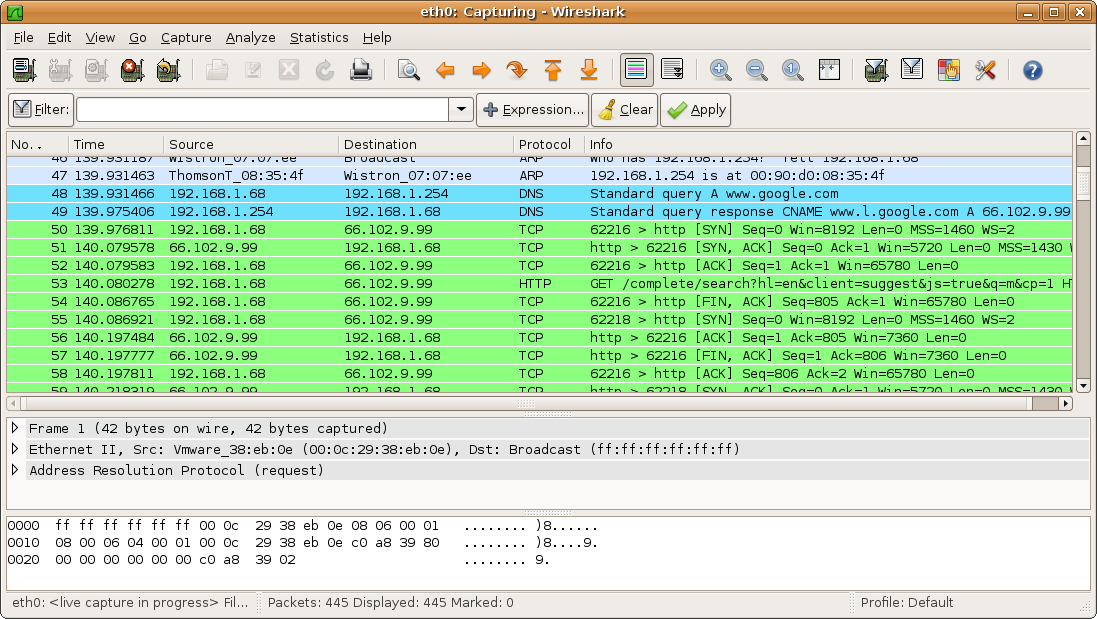
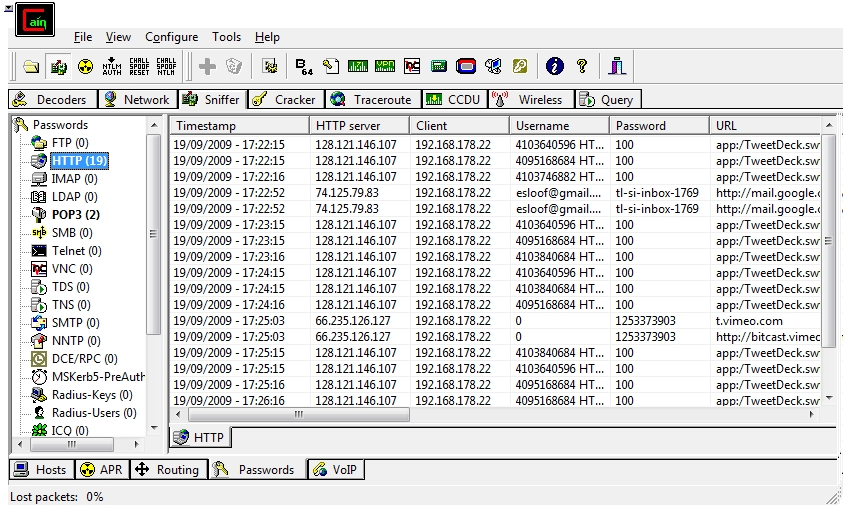
Screenshots of major packet sniffer applications:
1) Wireshark:
 |
| http://upload.wikimedia.org/wikipedia/commons/0/03/Wireshark_screenshot.png |
2) Cain and Abel:
 |
| http://www.ntpro.nl/blog/uploads/Cain.jpg |

No comments:
Post a Comment